.webp&w=384&q=75)

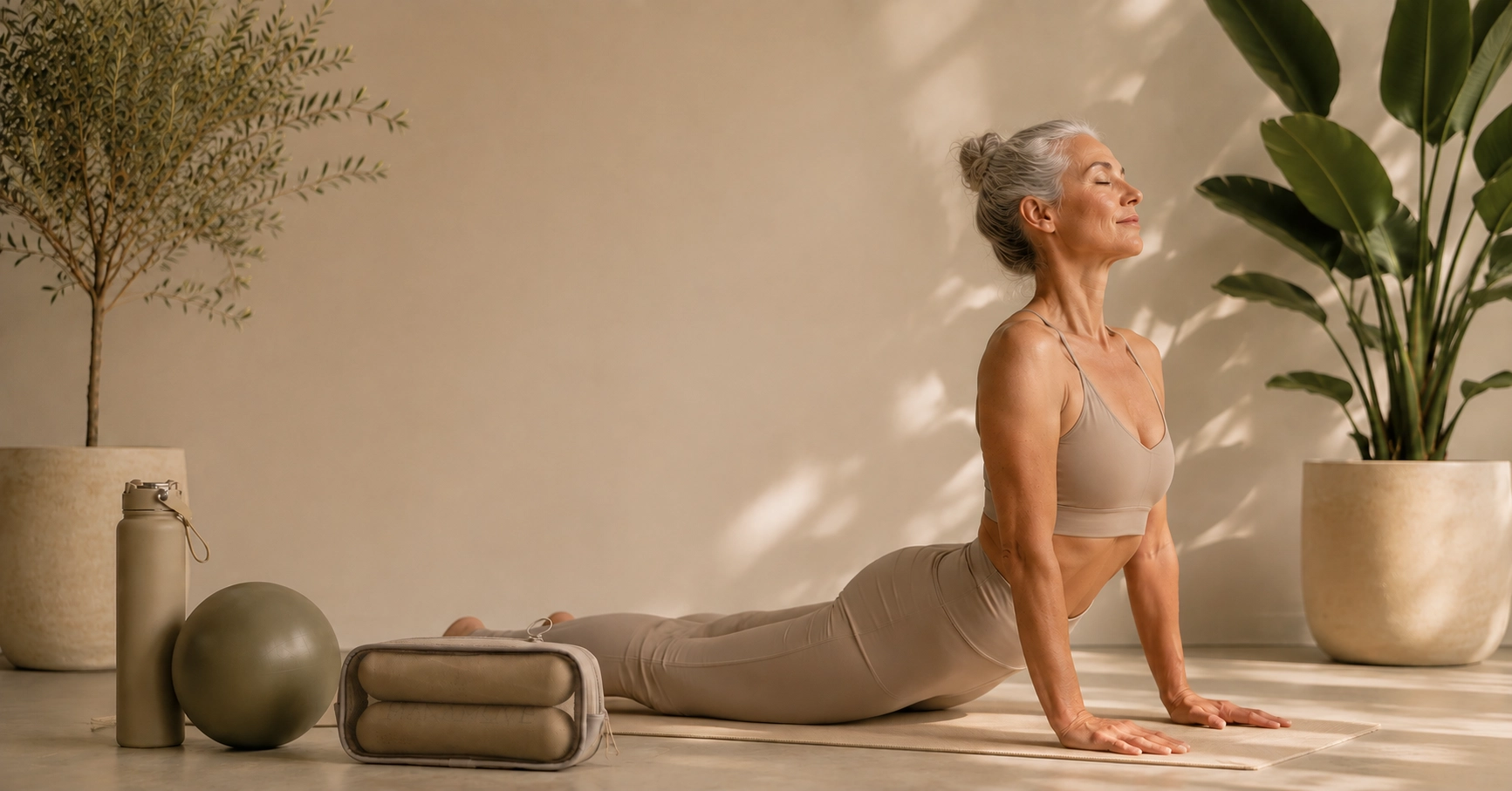
Why Sustainable Movement Matters More Than Quick Results
Where fitness often focuses on looking good as fast as possible, something else matters just as much to many people: how do you stay strong, mobile and independent for years to come? That doesn't require extreme training, but staying functionally strong - being able to bend, lift, climb stairs and keep your balance, at any age.
What Happens to Your Body as You Age (and Why Movement Helps)
From your thirties onward, you gradually lose muscle mass and bone density if you're not actively training - a process that speeds up as you get older. Your balance and coordination also decline if you don't keep training them, simply because your body uses those skills less. The good news: this process can largely be slowed, and sometimes partly reversed, with the right kind of movement. Pilates is particularly well-suited for this because it trains strength, balance and mobility all at once, without the strain of high-impact sports.
What Makes Pilates Unique Here
Bone Density and Joint Health
Pilates is a weight-bearing, low-impact form of training that loads joints without overloading them. This makes it well suited to supporting bone density without the injury risk that can come with high-impact training, like running or heavy strength training.
Balance and Fall Prevention
One of the biggest risks as we age is falling - and the consequences can be significant. Pilates intensively trains proprioception (body awareness) and balance, especially in single-leg exercises or with unstable elements like a ball or ring. By regularly challenging your balance in a safe setting, your body gets better at recovering from a wobbly moment - exactly what you need to prevent a fall.
Functional Strength for Daily Life
Rather than training isolated muscles, pilates trains movement patterns you use daily: bending, twisting, reaching, standing up from a chair. That makes the strength you build directly usable in real life - think carrying groceries, playing with your grandchild, or climbing stairs with ease.
Posture and Back Pain
Many common back complaints stem from a weak core combined with poor posture, often built up over years. Pilates specifically targets the deep core muscles that support your spine, which over time can help reduce back pain and improve posture.
How to Get Started: A Sample Weekly Schedule
Consistency matters more than intensity. A realistic schedule to start with:
Monday: Core and Balance (20 min)
Focus on slow, controlled movements like the roll-up and single-leg stretch. Use a pilates ball between your knees for extra activation.
Wednesday: Strength and Resistance (20 min)
Work with a pilates ring for light resistance exercises targeting arms, legs and back.
Friday or Saturday: Mobility and Single-Leg Balance
Focus on exercises that challenge your balance, like standing balance work or slow movement transitions.
Two to three short sessions a week deliver more long-term benefit than sporadic heavy workouts. Build up gradually and only increase intensity once a movement feels comfortable.
FAQ
Is pilates suitable if I'm older and have never exercised?
Yes. Pilates is low-impact and intensity is fully adjustable, making it one of the safest ways to (re)start moving.
How often should I train for noticeable results?
2-3 times a week is enough to build improvements in balance, strength and mobility - as long as you stay consistent. Most people notice a difference after 4-6 weeks.
Can pilates help with existing joint issues?
Pilates is often recommended as a low-impact option for joint issues, but if you have existing injuries or chronic conditions, always check with a physiotherapist first about which exercises suit you.


.webp&w=256&q=75)