.webp&w=384&q=75)
More Than a Training Tool
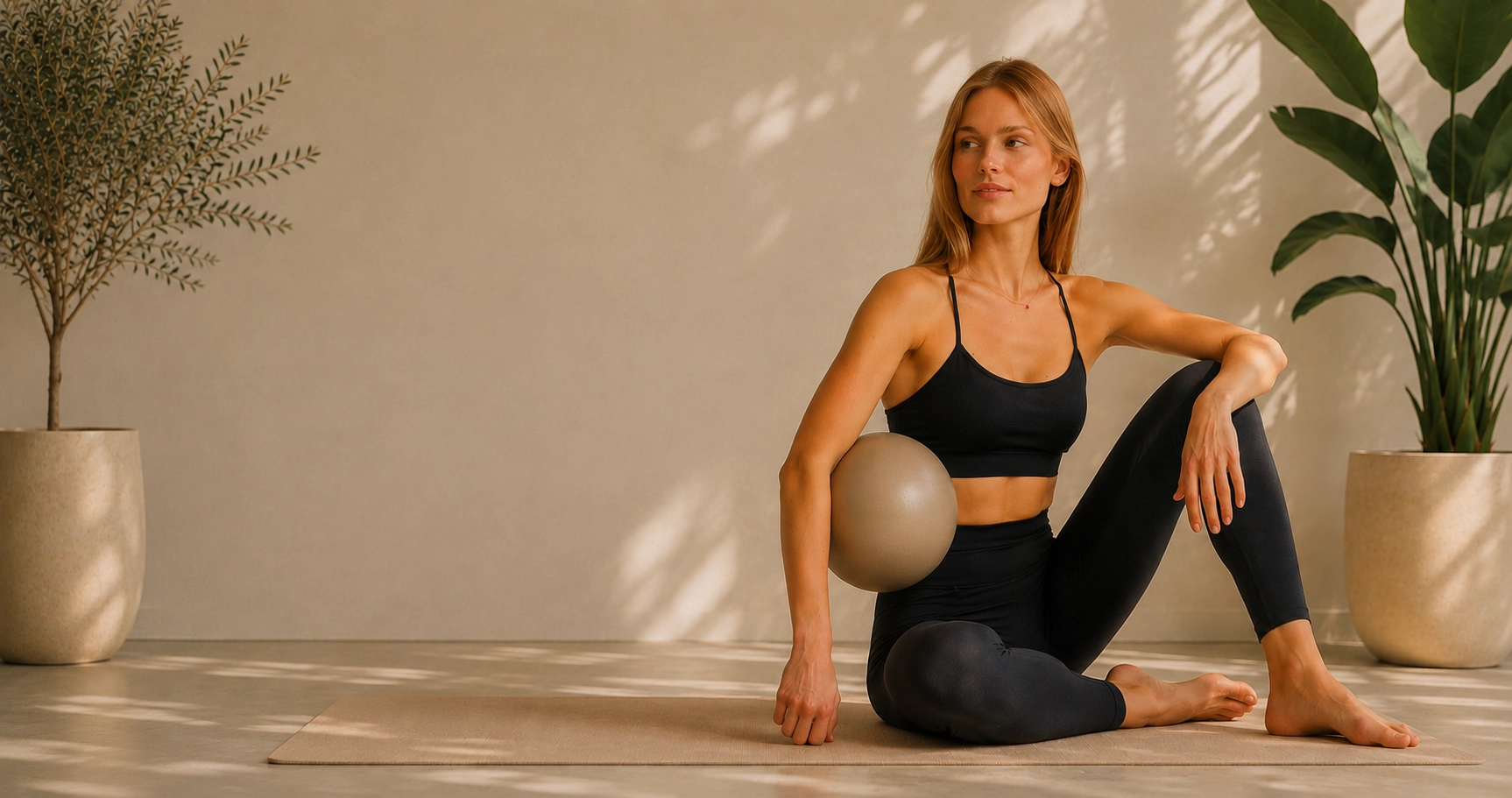
You probably know your pilates ball from active exercises - core, balance, strength. But the same ball is just as useful for moments when you want to relax: after an intense workout, on a day you wake up stiff, or during gentle recovery after an injury. In this guide you'll learn why muscles get stiff, when the ball is a good idea (and when it isn't), and which exercises work for different situations.
Why Do You Actually Get Stiff?
Stiffness after exercise usually comes from small, harmless damage to your muscle fibers - the same process behind delayed onset muscle soreness (DOMS), often felt a day or two after an intense workout. Sitting still for long periods also causes stiffness, since muscles and the connective tissue around them get less blood flow when you move little. Gentle pressure, like from a ball, can stimulate local blood flow and reduce tension - similar to a self-massage, but more targeted at smaller zones than a foam roller can reach.
When Is This Useful for You?
After a Tough Workout
Sore calves after a run or pilates session? Sit down and slowly roll the ball under your calf. The gentle pressure helps the muscle relax, similar to a self-massage - but more targeted.
If You Sit a Lot
Long days at a desk often create tension between your shoulder blades and in your lower back. Place the ball between your back and the wall and move gently up and down - even two minutes can make a difference, especially if you repeat this daily.
During Gentle Recovery or Rehab
Coming back from an injury or a period of little movement? The ball is a gentle, low-barrier way to reconnect with your body, without heavy strain. If you have an active injury, always check with a physiotherapist first about which movements suit you - the ball is a complement to guided rehab, not a replacement for it.
Before or After Sleep
A few minutes of gentle rolling before bed can help release physical tension from the day, which in turn may make it easier to fall asleep.
5 Practical Examples
1. Foot Soles After a Long Day
Slowly roll the ball barefoot under your foot, from heel to toes, for about 1-2 minutes per foot. Great after a day of standing or a jump-heavy workout.
2. Relax Your Upper Back Against the Wall
As described above: ball between your back and the wall, moving gently in small circles or up and down. Ideal after a day behind your laptop.
3. Calves After Exercise
Sit on the floor, ball under your calf, roll gently back and forth from knee to ankle. Combine with deep breathing for extra relaxation.
4. Glutes After Long Sitting
Sit on the ball with your weight on one glute and move gently in small circles, about a minute per side. Great after a long drive or workday.
5. Settling Your Lower Back
Lie on your back with the ball just beside (not on) your lower back. Let your weight sink and breathe calmly - a nice way to close out your day.
How to Build a Recovery Routine
Start with one zone at a time, like your calves or lower back, and gradually expand to more zones as you notice it's helping. Five to ten minutes, two to three times a week (or more if you train intensively), is enough for most people. Always work gently and build up pressure slowly - it can feel "pleasantly uncomfortable", but never painful.
When Should You Not Do This Yourself?
With acute injuries, swelling, open wounds, or if an exercise causes sharp pain instead of a pleasant pressure, stop immediately and consult a physiotherapist or doctor. The ball is meant for light tension and general stiffness, not for self-treating injuries.
FAQ
Can I use the same ball I use for my workouts?
Yes, the same pilates ball you use for exercises works great for recovery too.
How often can I do this?
Daily is fine, as long as you go gently and listen to your body.
Is this a replacement for physiotherapy?
No. For an active injury or persistent symptoms, this is a complement, not a replacement for professional guidance.


.webp&w=256&q=75)